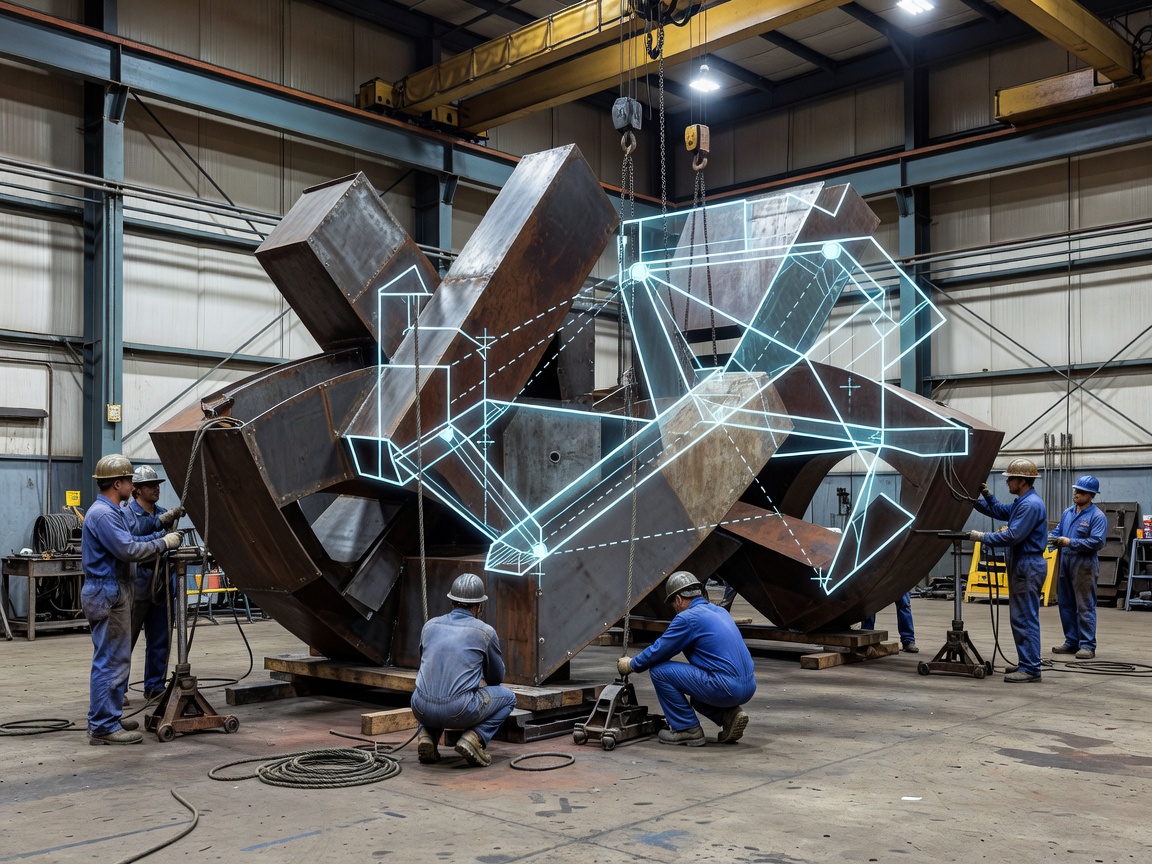
Oversized Dimensions and Fragile Structures
Moving large-scale sculptures requires meticulous spatial and mechanical planning. Scale introduces complexity. An oversized object often possesses fragile cantilevered components or structural weaknesses invisible to the naked eye. Handling protocols must prioritize the structural integrity of the artwork above the speed of the operation.
Every movement sequence is planned in advance. We assess the artwork's specific geometry to determine safe handling points, avoiding stress on weak joints or patinated surfaces.
Doorway and Access Assessment
The primary hurdle in large artwork movement is architectural restriction. A comprehensive site survey maps the exact path the sculpture will take.
- Measure all doorway widths and heights along the route.
- Calculate turning circles required for corners and corridors.
- Assess floor load-bearing capacities for heavy bronzes and stone pieces.
- Evaluate step inclines, ramps, and stairwell clearances.
- Confirm service lift dimensions and weight limits.
Centre-of-Gravity Planning
Understanding weight distribution is critical before any lifting equipment is engaged. Unusual shapes dictate an uneven centre of gravity. If a piece is top-heavy or leans significantly, it requires specialized counter-balancing during the lift. Unplanned shifts in mass during handling lead to uncontrolled movement.
Handling-Team Coordination
A successful operation relies on clear communication. A designated team leader controls the movement sequence. The team coordinates lifting, spotting, and maneuvering. Silent signals or precise verbal commands ensure everyone operates synchronously.
- Define roles before the operation begins.
- Establish clear communication protocols.
- Identify pinch points and hazardous zones.
- Plan resting points along the route.
Protective Equipment and Site Preparation
Protective equipment must scale with the object. High-capacity gantries, heavy-duty skates, and customized pallet jacks are utilized depending on the environment. Hard-wheeled equipment requires floor protection layers in finished gallery spaces. Site preparation includes clearing the route of all non-essential obstacles and ensuring adequate lighting.
Once the piece reaches its destination, the final positioning requires micro-adjustments. We plan these final inches meticulously to align with plinths or floor mountings without scuffing the base.
Note: We provide guidance strictly at the planning level. We do not provide hazardous lifting instructions or prescribe equipment usage for unverified projects.