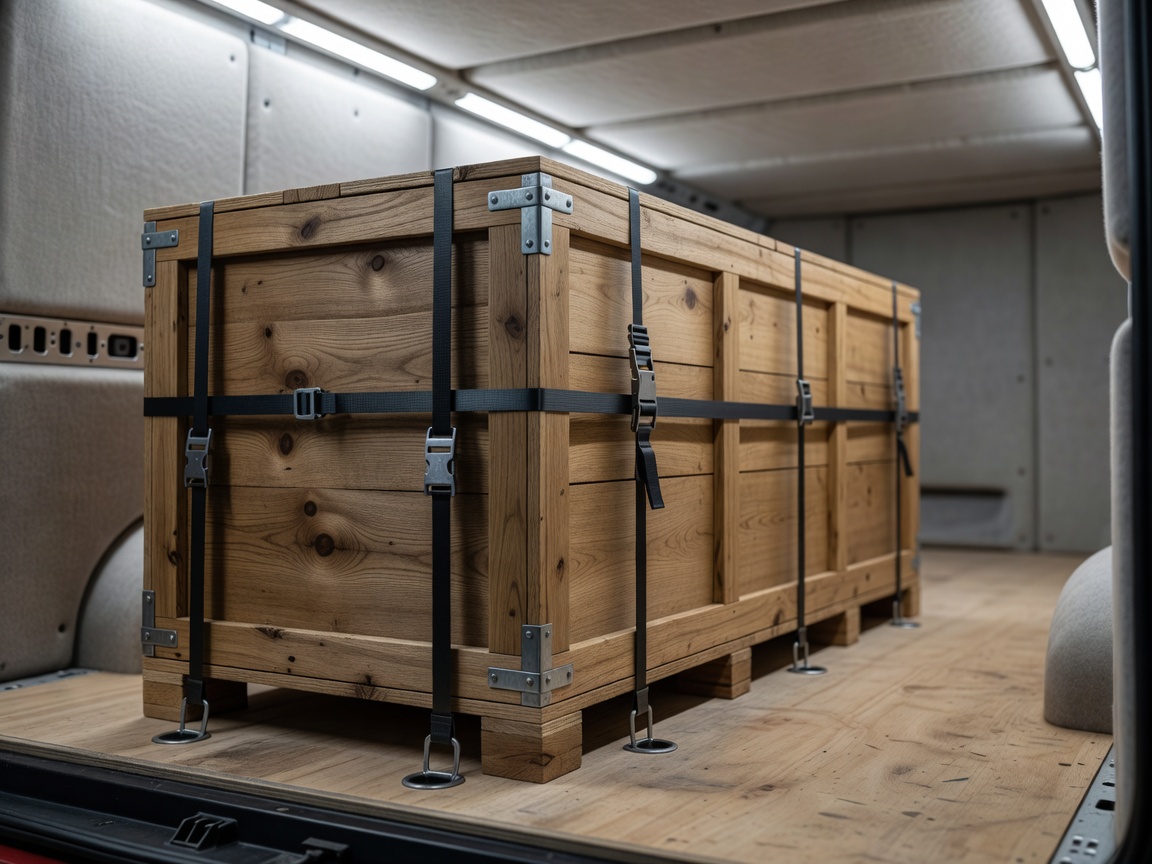
Transport Assessment
Before any physical movement occurs, a thorough assessment is required. Sculpture transport depends on precise measurement and structural understanding. Moving three-dimensional objects involves calculating dynamic forces during road transit. We focus on stabilizing objects against vibration, acceleration, and deceleration.
Proper assessment removes operational guesswork. Information gathered during the initial planning phase dictates vehicle selection, handling equipment, and route viability.
Dimensions and Weight Metrics
Measurements dictate the entire operation. Calculate height, width, and depth including any bases or protective plinths. Ascertain the exact weight. Payload capacity of vehicles and lifting equipment must never be exceeded.
- Determine extreme outer dimensions (LxWxH).
- Calculate gross weight (artwork + crate + packing materials).
- Identify the centre of gravity to prevent tipping during loading.
- Measure ground clearance requirements for pallet trucks or forklifts.
- Check dimensions against standard transport vehicle door heights.
Centre of Gravity Considerations
Sculptures rarely possess a uniform mass. Bronzes may be top-heavy. Stone carvings may have asymmetrical weight distribution. High centre-of-gravity objects require specialized restraint systems. We plan tie-down points that secure the load without placing stress on fragile artistic elements.
Vehicle and Access Planning
Vehicle selection must match the artwork's specific needs. Air-ride suspension reduces road vibration transmission. Climate-controlled environments maintain stable temperature and humidity levels for environmentally sensitive materials like wood, wax, or contemporary plastics.
Access planning involves mapping the path from the current installation point to the loading area. Ensure vehicles have sufficient turning circles and parking clearances at both collection and delivery sites.
Loading Requirements
Loading is a critical phase. Ensure the loading bay matches the tail-lift capacity. Plan the sequence of movement. Determine if gantries, cranes, or heavy-duty pallet trucks are required to cross the threshold from building to vehicle.
- Verify tail-lift weight capacities.
- Assess floor gradients between gallery and loading zone.
- Confirm structural floor loading limits in transit areas.
- Coordinate weather protection during the loading sequence.
Documentation and Scheduling
Condition documentation establishes the baseline state of the artwork prior to movement. We recommend detailed photographic records and written condition reports. Collection and delivery scheduling must align with site availability, installation teams, and local access restrictions.
Note: We do not prescribe equipment capacities without verified project information. All transport plans must be independently verified against local regulations and specific artwork constraints.